ISKCON 60 yearsJagannatha Temple Berlin

WhatsApp Channel

Receive dates, festivals and important temple updates directly on your phone.

Open WhatsApp Channel

Your First Temple Visit

We are glad you would like to visit.

Perhaps you would like to deepen your spiritual journey, or perhaps you are simply curious about the temple. Here you can encounter kirtan, meditation and Vedic philosophy in an open and welcoming atmosphere.

No prior knowledge is needed. Whether you have practised yoga for years or are visiting a Krishna temple for the first time, you are warmly invited to listen, sing along, ask questions and get to know the community.

Our regular programmes combine mantra meditation, insights from the Bhagavad-gita and other Vedic scriptures, and time to meet and talk with others.

Feel free to contact us before your first visit. That way we can welcome you personally and set aside some time for your questions.

Let us know you are coming

Directions

How to find us.

Jagannatha Temple Berlin
ISKCON Berlin e. V.
Berliner Allee 209
13088 Berlin

By public transport
The Berliner Allee/Rennbahnstraße stop is served by tram lines 12 and 27 and bus lines 156, 255, 259 and N50. Alternatively, take the M4 or M13 tram to Weißer See and walk along Berliner Allee to number 209. Please check the current connection with BVG before travelling.

The Supreme Personality of Godhead

Who Is Krishna?

Krishna among cows, peacocks and other animals in Vrindavana
Krishna in the peaceful landscape of Vrindavana

The All-Attractive One

Krishna is a name of the original Supreme Person, the source of all existence. God has many names, each describing a different aspect of His personality. Names such as Allah, Vishnu, Jehovah and God point to His greatness and to His position as creator, maintainer of the universe and Lord of all beings.

The name Krishna means ‘the all-attractive one’. It expresses the incomparable charm and beauty of the Supreme Person as He reveals Himself to His most intimate devotees.

Krishna’s Manifestations and Pastimes

Krishna expands into other divine forms—the Avataras —to create and sustain the universe. At the same time, He lives in the spiritual world in loving relationships with His countless companions.

From time to time He also appears in the material world to free His devotees from material existence and check destructive forces. He performs superhuman deeds: lifting a mountain, swallowing a forest fire and subduing extraordinarily powerful demons—as effortlessly as a child plays with toys.

In the Bhagavad-gita Krishna speaks about His own nature and explains how anyone can know Him through Krishna consciousness, the path of Bhakti-Yoga. The Srimad-Bhagavatam describes Krishna’s extraordinary personality and captivating pastimes in particular detail in the Tenth Canto.

Brahman, Paramatma and Bhagavan

Krishna is the source of Brahman, the all-pervading spiritual energy that encompasses everything and everyone. All living beings are minute parts of His energy. As Paramatma, the Supersoul, He is also present within every atom and in the heart of every living being.

BrahmanThe all-pervading spiritual reality.
ParamatmaThe Supersoul in the heart of every living being and within every atom.
BhagavanThe Supreme Person and the source of all energies.

Ultimately, Krishna is Bhagavan, the Supreme Person who possesses all opulences without limit: wealth, strength, fame, knowledge, beauty and renunciation.

Realisation of the Absolute Truth unfolds in three stages. First, one understands its all-pervading Brahman aspect. Next, one realises its presence as Paramatma within one’s own heart and in all other beings. Finally, one meets Krishna as Bhagavan—the all-attractive Supreme Person, the cause of all causes and the origin of all that exists.

Krishna’s Eternal Form and Relationships

Krishna is eternally youthful. His complexion resembles a fresh rain cloud; He wears flower garlands and a peacock feather in His curly black hair. Surrounded by His loving devotees, He reciprocates their affection in many different relationships.

As a small child, He charms the residents of Vrindavana with His lovable, mischievous behaviour—for instance, when He steals butter. As a cowherd boy, He plays with His friends, the Gopas. As a youth, His irresistible beauty, charm and flute playing win the hearts of the cowherd girls, the Gopis. As friend and teacher, He instructs Arjuna, Uddhava and other great personalities.

The Testimony of Scripture

Great personalities in the Vedic tradition—including Brahma, Narada, Asita, Devala and Vyasadeva, who compiled the Vedas—recognise Krishna as the Supreme Person and the Absolute Truth. Arjuna, to whom Krishna spoke the Bhagavad-gita, likewise confirms Him as the original source of all energies and the one from whom the creation, maintenance and dissolution of the material world proceed.

Gaudiya Vaishnava Tradition

The Six Goswamis of Vrindavana

The Six Goswamis together in Vrindavana
The Six Goswamis of Vrindavana
Rupa Goswami Sanatana Goswami Jiva Goswami Gopala Bhatta Goswami Raghunatha Dasa Goswami Raghunatha Bhatta Goswami

Who Were the Six Goswamis?

The Six Goswamis were a group of highly learned and renounced devotees of Krishna who lived in India in the late fifteenth and sixteenth centuries and wrote important works. They were among Chaitanya Mahaprabhu’s foremost disciples.

Several came from influential or wealthy families. Nevertheless, they left behind property, social position and political influence to live as wandering ascetics. They devoted themselves to the study of the Vedic scriptures and wrote extensive philosophical works and commentaries.

In Vrindavana they rediscovered many forgotten places where Krishna had revealed His pastimes. They also established important temples there that are still visited by pilgrims from around the world.

Their Contribution to the Bhakti Tradition

At Chaitanya Mahaprabhu’s request, the Goswamis demonstrated from the Vedic scriptures that Bhakti-Yoga —loving devotional service to God—is the essential heart of all Vedic teachings.

Their writings form a major part of the philosophical and scriptural foundation of Gaudiya Vaishnavism. The International Society for Krishna Consciousness, ISKCON—widely known as the Hare Krishna movement—is also rooted in this tradition.

Their Different Paths Through Life

The brothers Rupa and Sanatana had previously served as senior ministers in the government of the Bengal Sultanate. Their nephew Jiva is regarded by some Sanskrit scholars as one of the greatest philosophers in Indian intellectual history.

Gopala Bhatta came from a respected South Indian family. Raghunatha Dasa’s father and uncle were among the wealthiest landowners of their time. Raghunatha Bhatta studied with Rupa Goswami and was later connected with the tradition of Vrindavana’s celebrated Govindaji Temple.

What Does ‘Goswami’ Mean? The Sanskrit word go here means ‘senses’, while swami means ‘master’. A Goswami is therefore one who masters the senses and engages them in the service of God.

Sri Chaitanya Mahaprabhu

Who Is Chaitanya Mahaprabhu?

Chaitanya Mahaprabhu singing sankirtana with His companions
Chaitanya Mahaprabhu performing sankirtana with His companions

His Life and Movement

Chaitanya Mahaprabhu appeared toward the end of the fifteenth century in Mayapur, in the Indian state of West Bengal, as a devotee of Krishna. He spread Sankirtana —the congregational public chanting of God’s names—as the most effective and accessible path by which anyone can attain spiritual perfection. Through His influence, many prominent religious scholars in India and their students became devotees of Krishna.

In His youth, Mahaprabhu founded a Sanskrit school in Navadvipa, then one of India’s foremost centres of learning. He soon became known as an exceptional scholar. At the age of twenty-four, He left His former life and accepted the renounced order, Sannyasa. He then travelled widely throughout India, encouraging everyone He met to chant the Hare Krishna maha-mantra.

His disciples and followers worship Him—on the authority of numerous Vedic scriptural statements—as Krishna Himself appearing in the role of His own devotee. The International Society for Krishna Consciousness, ISKCON, continues Chaitanya Mahaprabhu’s sankirtana movement to this day.

His Teachings

Through His humble, saintly character and profound knowledge of the conclusions of the Vedic scriptures, Mahaprabhu convinced even prominent advocates of impersonal philosophy that Krishna consciousness—loving devotion to the Supreme Person—is life’s highest goal.

At His request, the Six Goswamis of Vrindavana studied the Vedic scriptures in depth. From these texts they showed that Krishna-bhakti, devotional service to Krishna, is the essential heart of the Vedic teachings. Mahaprabhu’s extensive conversations with His devotees, including Ramananda Raya and Sanatana Goswami, provide an important philosophical and scriptural foundation for Gaudiya Vaishnavism, also known as Krishna consciousness.

The Siksastaka

Chaitanya Mahaprabhu Himself left only eight written verses, the Siksastaka. In them He teaches that chanting God’s names is the simplest and at the same time the most sublime spiritual practice for all people, everywhere.

He also manifested extraordinary signs of pure love of God. Great scholars among His followers, including the Six Goswamis, cited abundant scriptural evidence that Chaitanya Mahaprabhu is Krishna Himself, appearing as His own devotee.

The Lord’s Extraordinary Form

Why Does Krishna Appear as Jagannatha?

Sri Jagannatha dressed for a festival and adorned with flowers
Sri Jagannatha

King Indradyumna and the Deity Forms

The Puranas tell why the Supreme Lord, Sri Krishna, appears in Puri-dhama as Daru-brahman —the Absolute in a form of wood. King Indradyumna once found three logs in the sea. Krishna Himself came to him disguised as the divine architect Vishvakarma to carve the Deity forms from the wood.

Vishvakarma asked the king to let him work undisturbed in a closed room for twenty-one days. If anyone opened the door before then, the Deity forms would remain unfinished.

After fifteen days, no sound could be heard from the room. Queen Gundicha feared that the elderly craftsman might have died without food and urged the king to open the door. Indradyumna wanted to keep his promise but eventually yielded to her concern. When he opened the door, the craftsman had disappeared—and to the king’s great sorrow, the Deity forms seemed not yet complete.

Then a voice spoke from the unseen: ‘Do not worry. Because you opened the door before the twenty-one days had passed and did not keep your promise, the Deity forms will remain in this form. You may now begin Their worship. Ask Brahma to come from Brahma-loka and install Them ceremonially.’

Not an Incomplete Form

At first glance, these forms of the Lord may appear incomplete. This has led to different interpretations: some see a reference to the formless Absolute, while others perceive similarities to Buddha or Bhairava. Some find the form unusual, while many especially cherish Jagannatha’s broad smile and loving eyes. Because the Supreme is the source and foundation of all that exists, people may perceive very different aspects within His form.

The Vaishnava tradition, however, preserves a deeper explanation: Jagannatha, Baladeva and Subhadra are neither deformed nor incomplete. Their forms are eternal and perfect in themselves. They did not first appear because Queen Gundicha persuaded the king to open the door early. Krishna had revealed this extraordinary form to His devotees before.

Jagannatha is also called Chakadola —‘the Lord with the great round eyes’. Mercifully He grants everyone His Darshan, His auspicious audience. The following account describes the loving relationship between the Lord and His devotees and explains why He appears in this extraordinary form.

Krishna’s Longing for Vrindavana

After Krishna had left Mathura, He lived in Dvaraka with His 16,108 queens. They served Him with great love and devotion. Yet Krishna’s thoughts repeatedly returned to Sri Vrindavana. He remembered the residents of Vraja, especially the gopas and gopis, and the loving pastimes He had shared with them.

In separation from Vrindavana, Krishna sometimes seemed to forget everything around Him. In His sleep He cried, ‘Radhe! Radhe! Gopi! Gopi!’ His queens wondered what had happened in Vrindavana that their beloved Lord could never forget that place and its residents.

They learned that Mother Rohini had witnessed Krishna’s childhood in Vrindavana and was then staying in Dvaraka. One day they asked Rohini Mata to tell them about Krishna’s youth and His pastimes in Vraja.

Rohini explained, ‘Krishna’s pastimes in Vrindavana are so extraordinary that even Krishna is attracted by hearing them described. I will tell you about them—but on one condition: Krishna and Balarama must not hear. Otherwise They will be overwhelmed by emotion.’

The Revelation of Their Eternal Form

One day, while Krishna and Balarama were attending an assembly in the Sudharma Hall, the queens gathered to hear Rohini’s narrations. Subhadra stood guard at the door and was to give a signal if Her brothers returned.

Rohini joyfully began to narrate Krishna’s childhood in Vrindavana. Her words were so enchanting that the queens became absorbed in hearing and forgot their surroundings. Subhadra, too, could not resist the power of these narrations and became completely immersed in them.

Krishna and Balarama sensed that Rohini was speaking about Their pastimes in Vrindavana. Filled with irresistible longing, They left the assembly and hurried to the hall. At the door They stood on either side of Subhadra and listened as well.

As the three became immersed in the narrations, extraordinary signs of spiritual ecstasy appeared on Their bodies. Their eyes became large and wide, and Their arms and legs withdrew into Their bodies. In this state of the highest love—Mahabhava —Krishna, Balarama and Subhadra revealed the forms worshipped today as Jagannatha, Baladeva and Subhadra.

At that moment Narada Muni arrived. From afar he saw the three wonderful forms. As he approached, Krishna, Balarama and Subhadra resumed Their customary forms. Narada danced with joy, his arms raised, and cried, ‘I have seen it! My dear Lord, I have seen many of Your astonishing transcendental forms, but never before this beautiful form. Please reveal it in one place so that everyone may receive darshan of this unique manifestation of Your mahabhava.’

To fulfil the desire of His devotee Narada Muni, Krishna revealed this form eternally in Sri Kshetra, the sacred Purushottama-dhama—present-day Jagannatha Puri.

Key terms: Darshan is the auspicious encounter with the worshipful Deity form. Mahabhava is the highest, all-overwhelming manifestation of divine love.

About ISKCON

What Does Hare Krishna Mean?

The Hare Krishna movement is the common name for the International Society for Krishna Consciousness (ISKCON). Its roots lie in India’s ancient Vedic scriptures. These texts also form an important foundation for many spiritual traditions and different paths of yoga.

At its heart is bhakti-yoga—the path of loving devotion to God, worshipped in this tradition as Krishna. The aim is not merely to study spirituality, but to bring it to life through meditation, mantra chanting, community and mindful daily living.

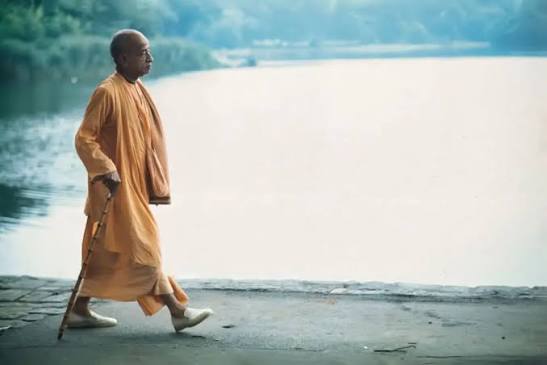
In 1965, A. C. Bhaktivedanta Swami Prabhupada, affectionately called Srila Prabhupada by his disciples, brought these teachings to the West. From this grew an international community with temples and centres throughout the world.

In 2026 we celebrate ISKCON’s sixtieth anniversary.

A Brief History

ISKCON—Key Milestones

  1. The journey begins: Srila Prabhupada travels aboard the cargo ship Jaladuta from Calcutta to the United States.

  2. Founding: The International Society for Krishna Consciousness is founded in a small storefront on New York’s Lower East Side.

  3. Ratha-Yatra: The first Ratha-yatra festival outside India is held in San Francisco.

  4. First centres: New communities and temples are established in San Francisco, Los Angeles, Seattle, Boston and Montreal, among other places.

  5. Organisation: The Governing Body Commission (GBC) is established as ISKCON’s governing authority. At the same time, the development of major pilgrimage centres in India begins.

  6. Books: Srila Prabhupada establishes the Bhaktivedanta Book Trust to publish his translations and commentaries.

  7. International: ISKCON has by now expanded to Canada, Europe, Mexico, South America, Africa and India.

  8. Worldwide community: By the time of Srila Prabhupada’s departure, ISKCON comprises more than one hundred temples and thousands of disciples.

  9. Today

    A living movement: ISKCON connects temples, rural communities, educational programmes, vegetarian restaurants and humanitarian projects around the world.

Philosophy

What Are Our Core Teachings?

The SoulEternal, conscious and spiritual by nature.
The SourceAll life is connected to the supreme source.
The PathSpiritual realisation becomes tangible in daily life.

In brief: the soul is spiritual and the body material. The body is the soul’s temporary home and instrument; the soul itself is neither born nor does it die. It is enduring, original and the conscious spark of life within the body.

By nature the soul is conscious and full of joy. Yet when it identifies completely with the body, it mistakes the temporary for its true self. It forgets its spiritual nature and seeks lasting happiness in things that can offer only temporary pleasure.

Just as rays emanate from the sun, all souls have their origin in one supreme source. The Vedas speak of this ultimate reality as Brahman, Narayana or Krishna. It is understood not only as impersonal energy, but as the living origin of all existence—possessing beauty, compassion and love.

All souls carry this loving nature within them, just as a spark possesses the fire’s heat and light in minute measure. Some turn away from their original relationship with the Supreme and undergo their experiences in the material world.

Over many lifetimes, awareness of one’s spiritual nature may become covered by countless impressions. Spiritual texts such as the Bhagavad-gita invite us to rediscover this connection. When their wisdom is not only heard but lived, the heart can soften again and the soul can return to its original relationship with the Supreme.

Meditation

What Does Meditation Mean?

Meditation means consciously holding one thought in the mind for a period of time, contemplating it deeply and finally becoming fully absorbed in it—without being carried away by other thoughts.

The original yoga scriptures describe the mind as constantly in motion. One thought leads to the next, forming an ongoing chain. Some thoughts are prompted by our surroundings and sensory impressions; others seem to surface unexpectedly from deeper memories and experiences.

Try Japa Meditation

Mantra & Kirtan

Why Do We Chant Hare Krishna?

A central way of rediscovering our spiritual nature is called Yajna in the Vedic scriptures. It means a conscious reorientation: life no longer revolves solely around our own desires, but is directed toward God again. We can offer our words, abilities, time and resources—both in everyday life and in shared spiritual practice.

The Vedas describe four great ages and, for each one, a form of spiritual practice especially suited to the people and conditions of that age:

Satya-YugaMeditation on Vishnu within the heart
Treta-YugaFire ceremonies and sacrifice
Dvapara-YugaCeremonial worship in the temple
Kali-YugaChanting the holy names

For the present age of Kali-yuga, chanting the names of God is considered especially accessible and effective. The Brihan-Naradiya Purana therefore emphasises that in this age the holy name of Hari—Krishna—is the essential spiritual path.

When Sri Chaitanya taught in sixteenth-century India, He placed the chanting of Krishna’s names at the centre of His teachings: quietly and personally as meditation, and also communally, musically and joyfully as kirtan. This tradition continues to shape the Hare Krishna movement today.

Reincarnation

Do We Believe in More Than One Life?

Yes. In the Vedic understanding, the soul’s journey does not end with the death of the body. If karmic consequences and attachments remain unresolved at the end of a life, the soul takes birth again and continues its journey in another body. This process is called reincarnation or transmigration of the soul.

In every life the body passes through different stages: birth, childhood, youth, old age and finally death. Although it changes continuously, the soul repeatedly identifies with its current external situation—with gender, family, possessions, social role or even a particular species of life.

The Vedic scriptures describe how the soul may pass through many different forms of life before receiving a human body again. This gives rise to the image of a turning wheel of changing bodies—the cycle of birth and death.

Founder of ISKCON

A Short Biography of Srila Prabhupada

Srila Prabhupada was born in Calcutta in 1896 with the name Abhay Charan. He initially lived as a family man and worked as an entrepreneur in the pharmaceutical industry.

At the age of fifty-four, he gradually withdrew from worldly life to devote himself fully to study, writing and his spiritual mission. He moved to Vrindavan, one of the Krishna tradition’s most important places of pilgrimage, and lived simply in the historic Radha-Damodara Temple. In 1959 he accepted the renounced order, sannyasa. During this period he began his life’s work: a multi-volume translation and commentary on the 18,000-verse Srimad-Bhagavatam.

In 1965, at the age of sixty-nine, Srila Prabhupada travelled to the United States on a cargo ship. When he reached New York, he had almost no money and knew virtually no one. After a difficult first year, he founded the International Society for Krishna Consciousness, ISKCON, in July 1966.

Under his personal guidance, a worldwide community of more than one hundred temples, schools, educational centres and farm projects developed within a few years. Despite his advanced age, Srila Prabhupada travelled around the world twelve times, lectured on six continents and guided thousands of people on their spiritual journeys. Through him, the traditional Ratha-yatra festivals also became known in many major cities internationally.

Srila Prabhupada’s books are a special part of his legacy. In his translations and commentaries he makes central works of Vedic literature accessible with both clarity and depth. Their authenticity, philosophical insight and readability are also valued in academic circles; they are used for teaching and study at many colleges and universities.

His writings have now appeared in more than eighty languages. To publish these works and make them available worldwide, Srila Prabhupada founded the Bhaktivedanta Book Trust in 1972. Today the BBT is the world’s largest publisher of classical Vaishnava texts and literature on bhakti-yoga and its philosophy.

Discover eBooks

Key Milestones

Srila Prabhupada’s Life

  1. Born in Calcutta, India.

  2. First meets his future spiritual master on a rooftop in Calcutta.

  3. Becomes a disciple of his guru, Bhaktisiddhanta Sarasvati.

  4. Publishes the first issue of Back to Godheadmagazine, which continues to this day.

  5. Moves to Vrindavan and begins translating his great life’s work, the Srimad-Bhagavatam.

  6. Accepts the renounced order, sannyasa.

  7. Travels to America on a cargo ship and suffers two heart attacks during the voyage.

  8. Founds the International Society for Krishna Consciousness, ISKCON, in New York.

  9. Departs this world, having founded 108 temples and spread the teachings of Krishna consciousness worldwide.

Every Wednesday

Bhagavad-gita Evening

Together we read Bhagavad-gita As It Is systematically, verse by verse. The talk provides space for explanations, questions and shared discussion.

  1. Afterwards
  2. Bhagavad-gita talk
  3. Then
    Blessing from Lord Jagannatha
  4. To conclude

Congregational Kirtan

Gaura-Arati

During Gaura-arati we sing a traditional kirtan together. The complete lyrics and translation are available on KKSongs.

View lyrics and translation

Congregational Prayer

Nrsimha-Pranama

After Gaura-arati we sing the Nrsimha-pranama together. The complete lyrics and translation are available on KKSongs.

View lyrics and translation

What Is Prasadam?

Food Prepared with Love

Prasadam is food prepared with love and offered to Krishna.

Project Partnership

Dialog+

ISKCON Berlin e. V. is a project partner of Dialog+, the digital learning platform for people who are active in and for religious communities.

Visit the Dialog+ website

Practical Support

FOOD FOR LIFE

Four FOOD FOR LIFE volunteers serving hot meals

Whenever we can, we provide practical support to Youth United’s FOOD FOR LIFE project. Every week, up to 300 plates of freshly cooked food are served to people in need. If you would also like to support the project, you can donate directly to FOOD FOR LIFE.

Support FOOD FOR LIFE

Every Saturday and Sunday

Morning Programme

Here is an overview of the songs sung in the temple: Open playlist on YouTube Music.

  1. Gurvastakam
  2. Nrsimha-Arati
  3. Tulasi-arati, NOI, Sikshashtakam & the Ten Offences
  4. Sringara-Arati
  5. Guru-Puja
  6. Srimad-Bhagavatam class
  7. Offering
  8. Blessing
  9. End of temple cleaning

Every Saturday

Saturday Festival

  1. Kirtan
  2. Talk
  3. , & blessing
  4. Temple cleaning

Once a Month

Kirtan Day

Welcome to our Kirtan Day! From 14:00 to 18:00 we chant together continuously for four hours. You are welcome to come and go at any time.

  1. Saturday · 14:00–18:00
  2. Saturday · 14:00–18:00
  3. Saturday · 14:00–18:00
  4. Saturday · 14:00–18:00
  5. Saturday · 14:00–18:00
  6. Saturday · 14:00–18:00

There will also be .

Festivals in November

Special Festivals

Choose a festival to see all the details.

Sunday · 8 November 2026

Diwali Celebration · 11:00 am–3:00 pm

A glowing terracotta dīpa

Offer your lamp and get some tasty Prasadam.

Support Diwali
On this auspicious day, giving is especially meaningful.

Donate now

Tuesday · 10 November 2026

Govardhana Puja · 3:30 pm

Govardhana Puja with a festively decorated representation of Govardhana Hill

Starting at 3:30 pm with Abhisheka, Kirtan, Lecture, Arati & Prasadam.

‘Of all the devotees, this Govardhana Hill is the best! O my friends, this hill supplies Kṛṣṇa and Balarāma, along with Their calves, cows and cowherd friends, with all kinds of necessities — water for drinking, very soft grass, caves, fruits, flowers and vegetables. In this way the hill offers respects to the Lord. Being touched by the lotus feet of Kṛṣṇa and Balarāma, Govardhana Hill appears very jubilant.’ Srimad-Bhagavatam (10.21.18)

Calculated for Berlin

Vaishnava Calendar

Ekadashi days, the respective times for breaking the fast, and important festivals—with dates and times calculated for Berlin.

  1. Pasankusa EkadashiBreak the fast on 23 October · 07:46–11:07
  2. Rama EkadashiBreak the fast on 6 November · 07:11–10:17
  3. Dīpa-dāna · Dipavali (Diwali)Also known as Deepavali
  4. Govardhana Puja
  5. Utthana EkadashiBreak the fast on 21 November · 07:39–10:27

Support the Temple

You can donate securely via PayPal or directly by bank transfer.

Donate with PayPal
Bank transfer
Recipient
ISKCON Berlin e. V.
IBAN
DE49 1007 0024 0966 1208 00
BIC
DEUTDEDBBER

Contact

Legal Information

Legal Notice

ISKCON Berlin e. V.
Berliner Allee 209
13088 Berlin

Members of the board authorised to represent the association individually:
Johannes-Georg Hartz
Karl Schimkowski
Daniel Koch

Register of associations:
Entered in the register of associations at Berlin-Charlottenburg Local Court
Registration no. VR 22442 B

Information pursuant to Article 13 GDPR

Privacy Policy

1. Controller

ISKCON Berlin e. V.
Berliner Allee 209
13088 Berlin
Email: mail@iskcon-berlin.com

2. Provision of the Website and Server Log Files

When you access this website, the web server processes technically necessary access data. This may include, in particular, the IP address, date and time of access, the page or file accessed, amount of data transferred, browser type, operating system, referrer URL and the requesting provider.

Processing is carried out to provide the website securely and reliably and to detect attacks and technical faults. The legal basis is Article 6(1)(f) GDPR. Our legitimate interest lies in the secure and functional operation of this website. Log data is retained only for as long as necessary for operation and security and is then deleted, unless further retention is required to investigate a security incident. Our hosting service provider processes this data on our behalf.

3. Contacting Us

If you write to us using the contact form or by email, we process your details—in particular your name, email address, selected topic, message and time of contact—solely to handle your enquiry and any follow-up questions.

If the enquiry concerns initiating or performing a contract, the legal basis is Article 6(1)(b) GDPR. In all other cases, processing is based on our legitimate interest in responding to enquiries under Article 6(1)(f) GDPR. The data is deleted once the enquiry has been fully handled and no statutory retention obligations or legitimate grounds for further storage remain.

4. Newsletter with Mailchimp

We use Mailchimp to send our newsletter. Mailchimp is a service of The Rocket Science Group LLC d/b/a Mailchimp, 675 Ponce De Leon Avenue NE, Suite 5000, Atlanta, GA 30308, USA, an Intuit group company.

When you subscribe, your email address, selected language, subscription time and confirmation status are transmitted to Mailchimp and processed there to send and manage the newsletter. Processing is based exclusively on your consent under Article 6(1)(a) GDPR. We use the double opt-in procedure for confirmation. You may withdraw your consent at any time with effect for the future by using the unsubscribe link in any newsletter or by contacting us.

Mailchimp also processes data in the United States. According to Mailchimp, transfers of European data are based on the EU–US Data Privacy Framework and, where required, the European Commission’s Standard Contractual Clauses. Further information is available in the Intuit/Mailchimp Privacy Statement and the Mailchimp Data Processing Addendum.

As a rule, we retain newsletter data until you unsubscribe. After withdrawal, necessary evidence may be retained under Article 6(1)(f) GDPR for the duration of statutory limitation periods in order to demonstrate that consent was previously given.

5. External Content and Links

This website contains links to external services, including YouTube, YouTube Music, Instagram, WhatsApp, PayPal, Dialog+ and other information sites. Merely displaying such a link does not transmit data to the respective provider. Once you click it, the external provider’s privacy policy applies.

6. Cookies and Similar Technologies

In its current form, this website does not use analytics, marketing or social-media cookies and does not contain embedded social-media videos or feeds. A consent banner is therefore not currently required. If services requiring consent are added later, they will be loaded only after your express consent and this policy will be updated accordingly.

Strictly necessary storage technologies may be used where required for the operation or security of the website. The legal basis is section 25(2) TDDDG in conjunction with Article 6(1)(f) GDPR.

7. Your Rights

Subject to the statutory requirements, you have the right of access, rectification, erasure, restriction of processing, data portability and objection to processing based on Article 6(1)(e) or (f) GDPR. You may withdraw consent at any time with effect for the future.

You also have the right to lodge a complaint with a data protection supervisory authority. In particular, you may contact the Berlin Commissioner for Data Protection and Freedom of Information, Alt-Moabit 59–61, 10555 Berlin, email: mailbox@datenschutz-berlin.de.

8. Currency of This Policy

Last updated: 8 October 2026. We will update this Privacy Policy if the website, the services used or the legal requirements change.

Mother Yashoda and young Krishna as Damodara

This week · 2–8 November 2026

Kartik at the Temple

Join us in singing the Damodarastakam and offering a small lamp to Sri Damodara.

Monday, 2 November6:30 pm
Tuesday, 3 November6:30 pm
Wednesday, 4 November6:30 pm
Thursday, 5 November6:30 pm
Friday, 6 November6:30 pm
Saturday, 7 November6:30 pm
Sunday, 8 November10:30 am

Support Diwali: On this auspicious day, giving is especially meaningful. Donate now

Find the Damodarastakam & Lyrics here.

Jagannatha, Baladeva and Subhadra at Jagannatha Temple Berlin

Jagannatha Temple Berlin

Spiritual Life.In the Heart of Berlin.

An open space for kirtan, bhakti-yoga, Vedic wisdom and genuine connection.

Kirtan before the altar at Jagannatha Temple Berlin

Temple & Community

Kirtan, connection and
bhakti in practice.

Congregational chanting, meditation, spiritual exchange and special guests shape life at Jagannatha Temple Berlin. Our kirtans bring together music and mantra meditation; talks on the Bhagavad-gita and other Vedic scriptures offer space for new perspectives and personal questions.

The temple is a place for people with different experiences and backgrounds. Whether you have been involved for years or are just getting to know us, here you can experience spirituality together with others.

Tips for your first visit →

Programme & Events

What’s Coming Up

Jagannatha

Who Jagannatha is, what the Deity forms signify and why They are worshipped in the temple.

Learn more →

Stay Connected

News, direct and simple.

Receive dates, festivals and important updates via WhatsApp, the Mailchimp newsletter or our Vaishnava Calendar.